Biography of Henri Matisse and his work: The Legacy of the Rosary Chapel and Essential Gallery
Discover the life and art of Henri Matisse, including his final masterpiece, the Rosary Chapel, and a selection of his most iconic paintings and collages.
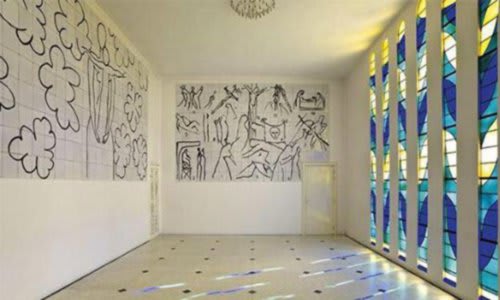
His final work was the decoration of the Rosary Chapel. Located in Vence in the Provence-Alpes-Côte d'Azur region of France, the chapel was built for the Convent of Dominican Nuns by architect Auguste Perret between 1949 and 1951; due to being entirely decorated by Henri Matisse, it also became known as ‘Matisse Chapel’, where the artist left his mark on the stained glass and tiles.
The intersection of sacred spaces and individual artistic vision is also a defining trait of other architectural masters: Antoni Gaudí: Biography and Work: The Masterpieces that Shaped Barcelona and the World
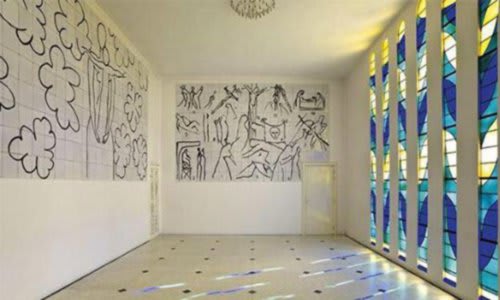
For Matisse, his work in Vence represented, in his own words, “an art of balance, purity, and tranquility.” As he was very ill, unfortunately, the artist did not attend its inauguration in 1951, but wrote:
“I did not seek beauty, I sought truth. I humbly present to you the Rosary Chapel of the Dominican Nuns of Vence... This work demanded four years of exhausting and assiduous work. It is the result of a lifetime of active work, and I consider it, despite all its imperfections, a masterpiece.”
In 1952, the Henri Matisse Museum was inaugurated in his hometown.
Two months before completing eighty-five years, he passed away in Nice on November 3, 1954, where he rests in the Cimiez Cemetery.
Gallery of Some Works:
- Paintings
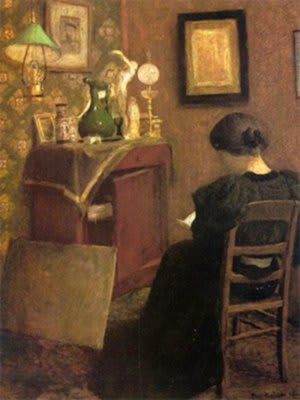
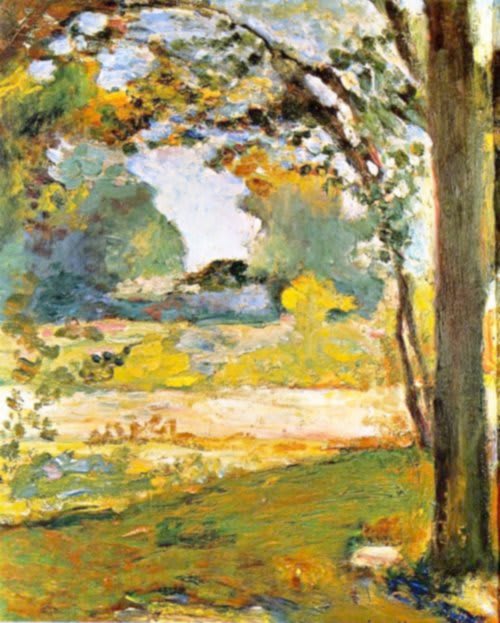
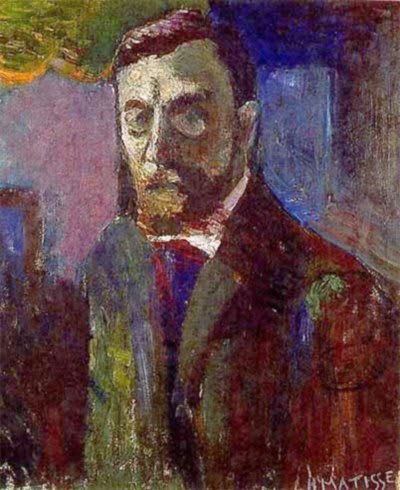
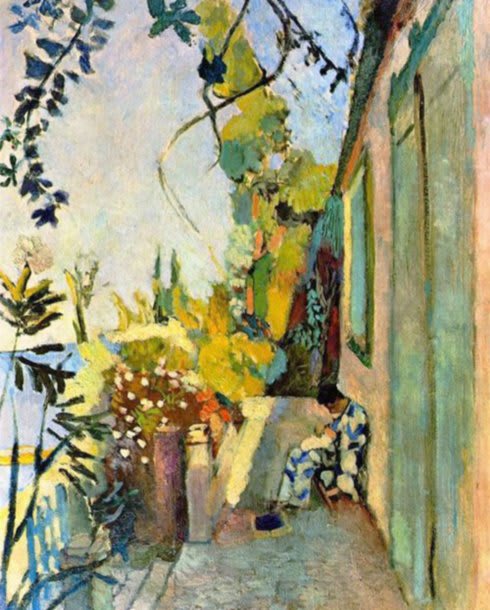
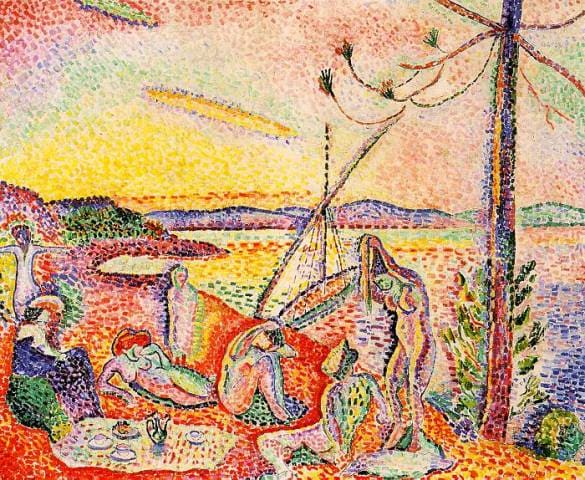
Luxury, Calm, and Voluptuousness - Matisse was inspired to paint this canvas in the pointillism of his friend Paul Signac. It was a precursor to Fauvism. The painting is also a tribute to Paul Cézanne, in reference to the Bathers
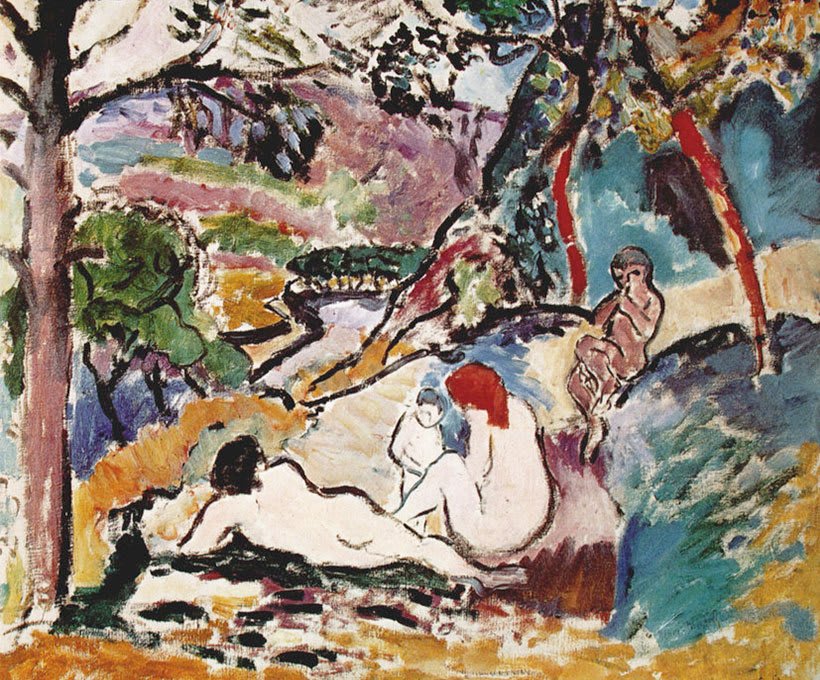
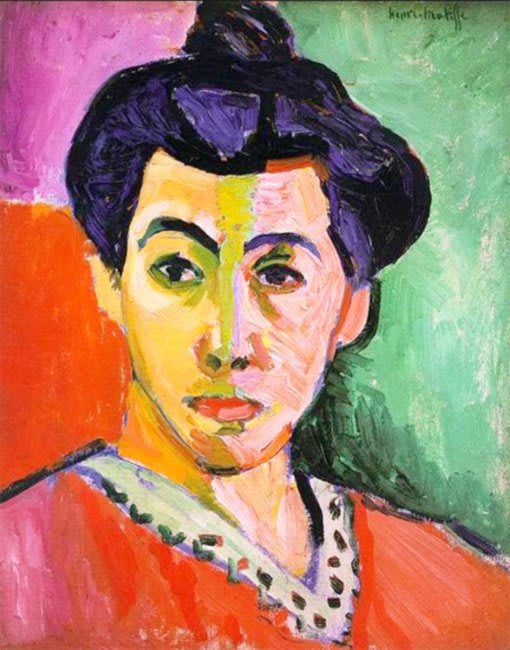
Composed in pure tones, this portrait of Madame Matisse became a reference of the Fauvist movement. Its name comes from the bold green-yellow stripe that, below the blue hair, separates the face vertically into a dark and a luminous side.
Matisse’s bold use of color in his portraiture serves as a fascinating parallel to the raw, psychological depth found in other European expressionists: Egon Schiele: Maturity, Conflicts, and Lasting Expressionist Legacy
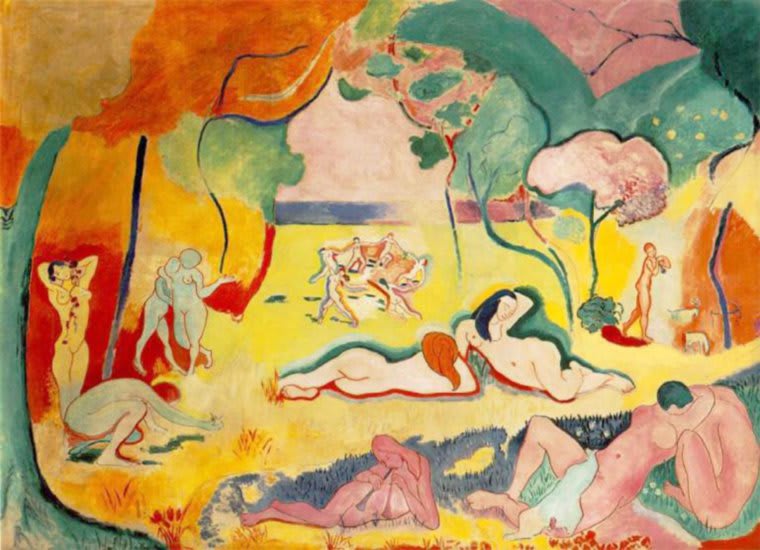
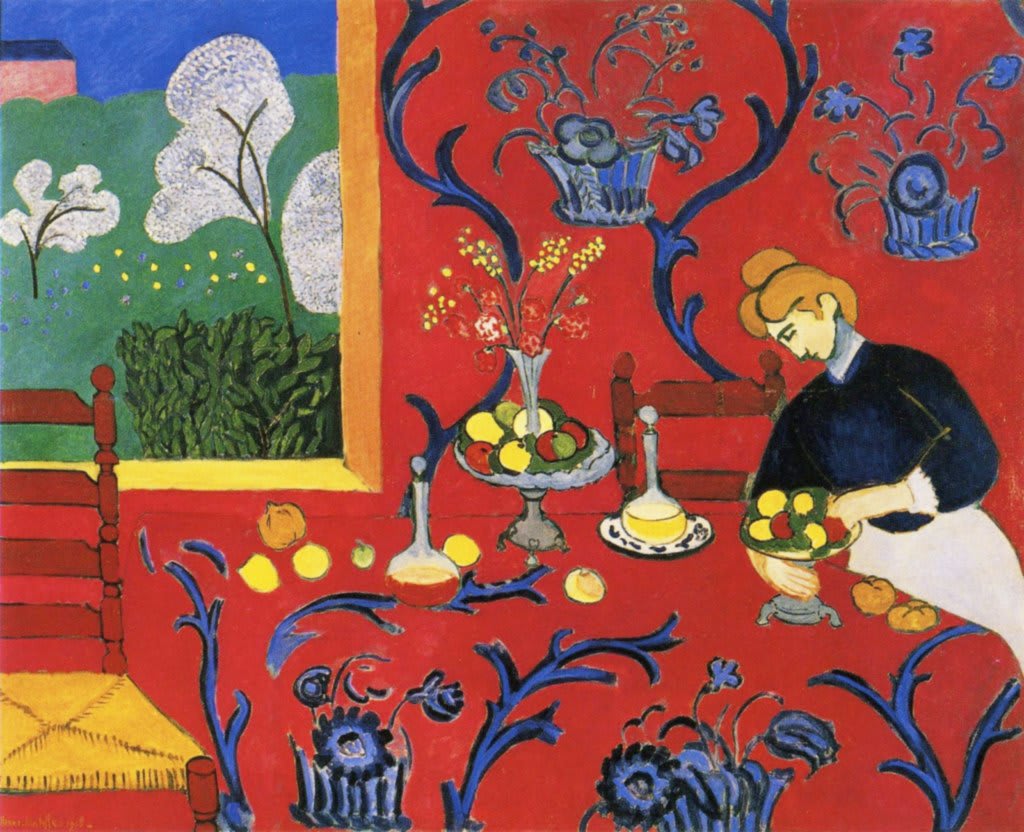
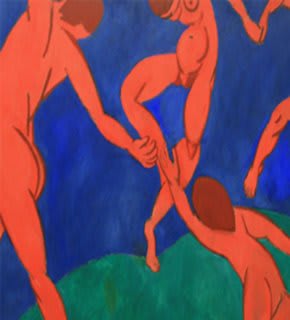
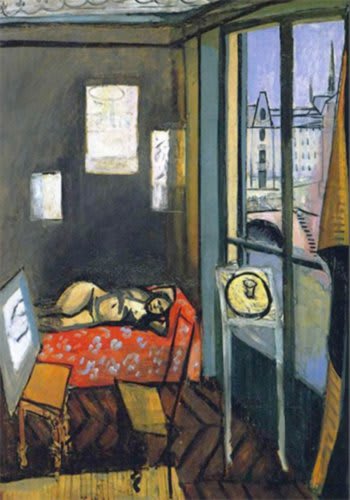
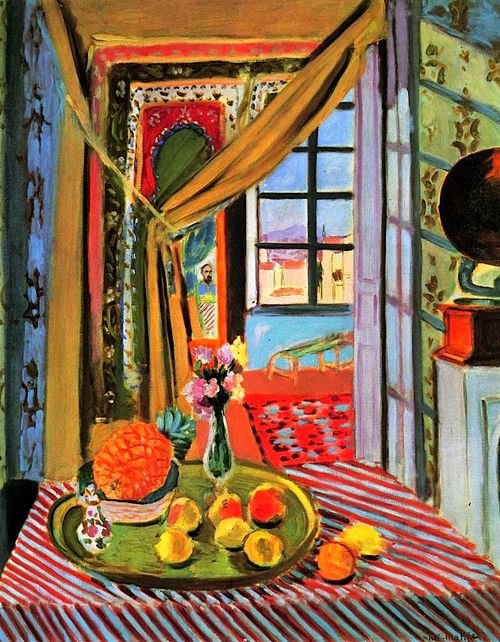
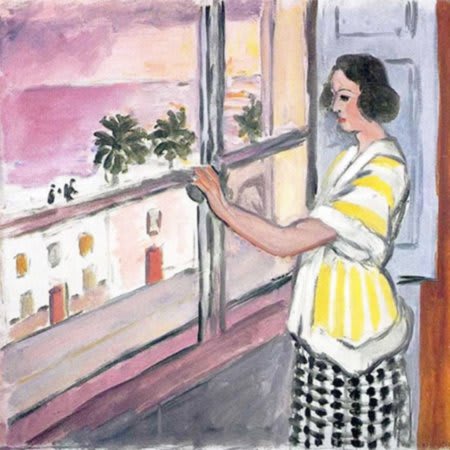
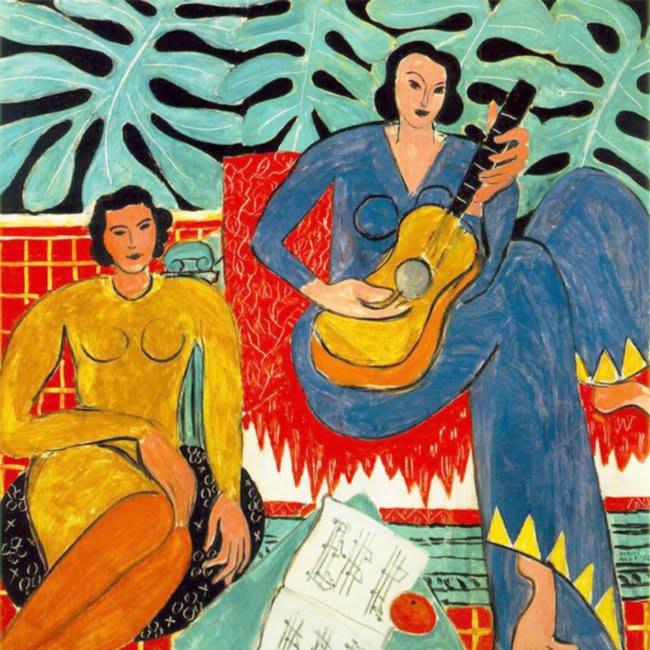
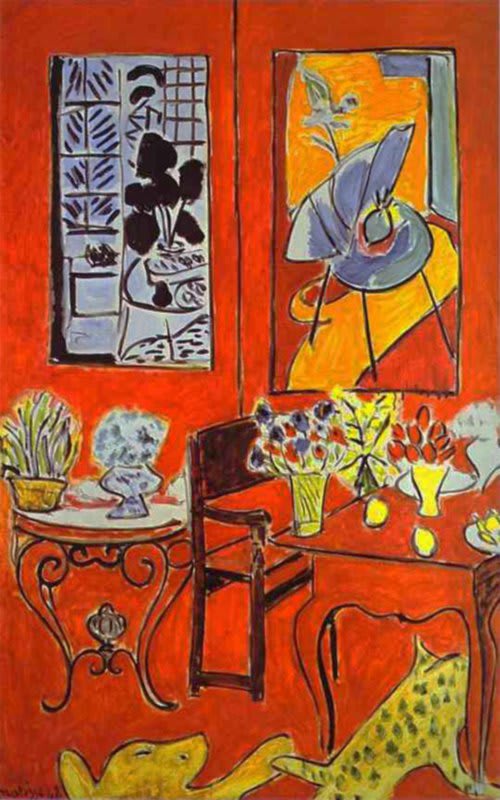
Great Red Interior - This is one of the last oil paintings made by Matisse, it is the maximum synthesis of his work.
The synthesis of space and color seen in Matisse's later paintings echoes the monumental scale often found in the work of Latin American masters: Biography of Candido Portinari: From Academia to Historic Mural Paintings
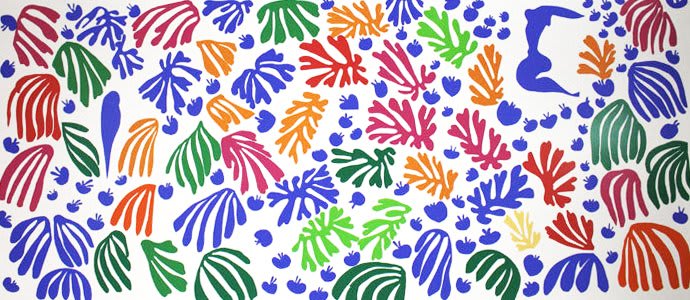
2- CUT AND COLLAGE - Pertaining to ‘Abstract Expressionism’, LA PERRUCHE ET LA SIRÈNE - is part of a series of cuts and collages initiated by Matisse from 1940, when the artist opted for this method to continue producing and not abandon art in his last years of life. We highlight this, as it is one of the greatest examples of works with this technique. The total work contains cut-out forms in contrasting colors on a white surface.
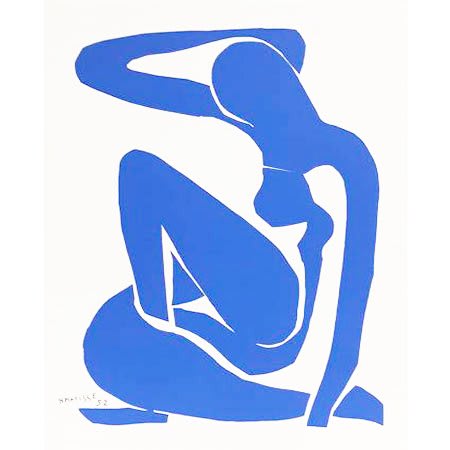
... AND THE MOST FAMOUS, 'BLUE NUDE'